

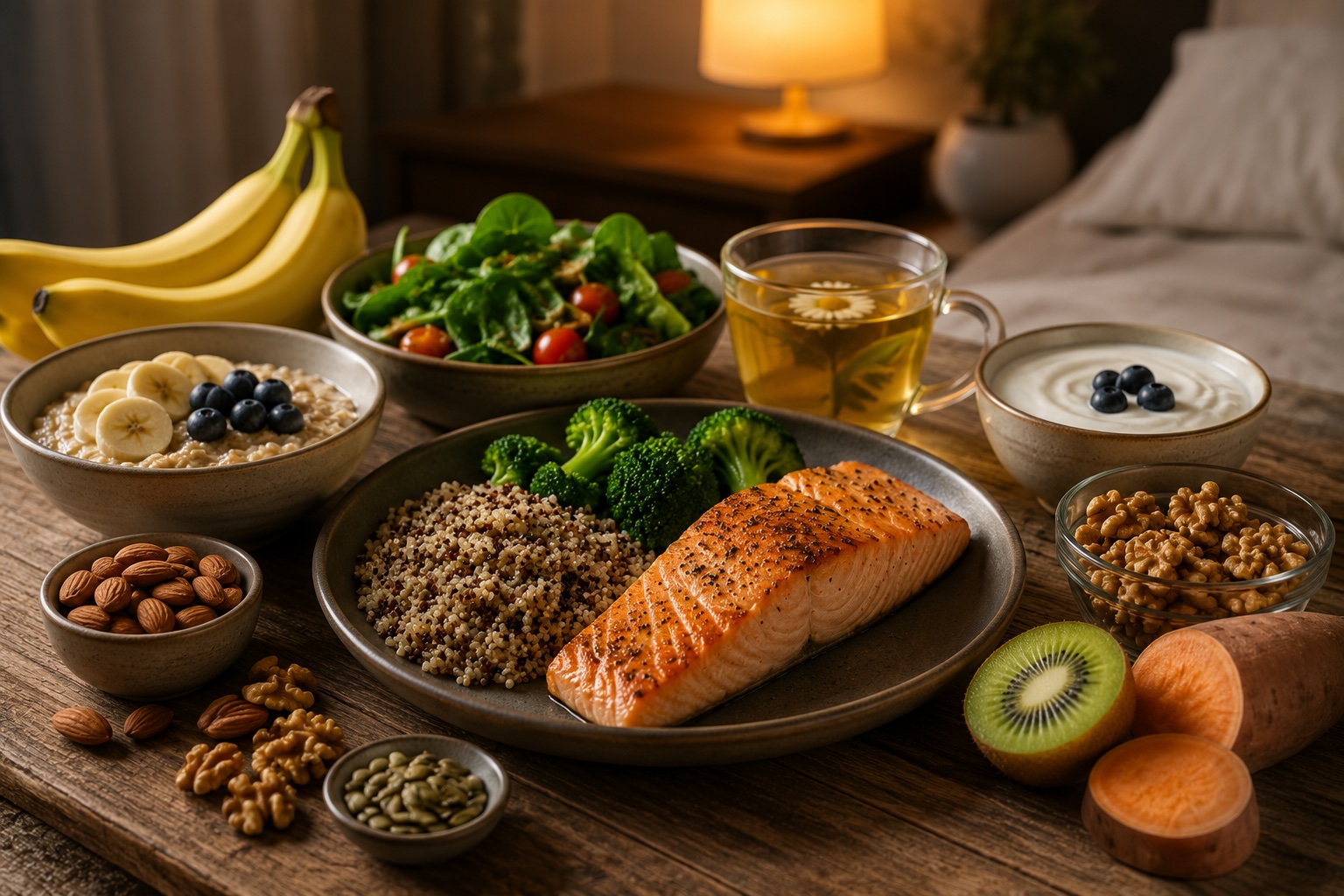
Healthy Eating Habits That Support Better Sleep
Healthy Eating Habits That Support Better Sleep
When people think about improving their sleep, they often focus on bedtime routines, meditation, relaxing music or reducing screen time. While these are all important, one factor is often overlooked: nutrition.
What you eat during the day can have a surprisingly powerful impact on how well you sleep at night. The foods you choose help regulate hormones, support brain function and influence the natural processes that prepare your body for rest.
Good sleep doesn’t begin when your head hits the pillow. In many ways, it starts in the kitchen.
Why Nutrition Matters for Sleep
Sleep is controlled by a complex interaction of hormones and neurotransmitters.
Two of the most important are:
- Melatonin – the hormone that helps regulate your sleep-wake cycle
- Serotonin – a neurotransmitter involved in mood, relaxation and sleep regulation
The nutrients we consume help the body produce and regulate these important chemicals.
A balanced diet supports:
- Stable energy levels
- Healthy hormone production
- Better mood
- Reduced inflammation
- Improved overall wellbeing
All of these factors contribute to better sleep quality.
Focus on Balanced Meals
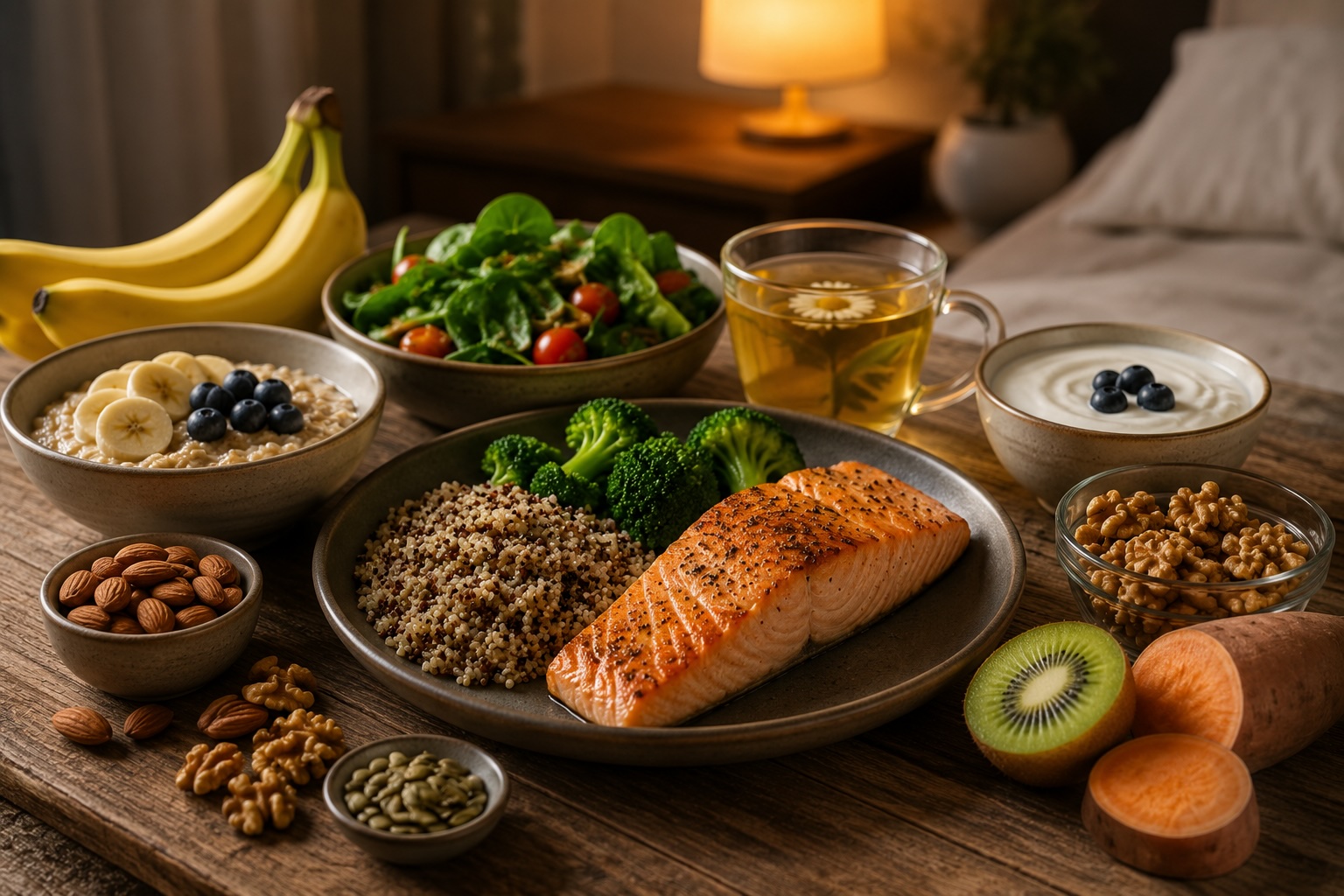
Rather than searching for a single “superfood” for sleep, focus on building balanced meals throughout the day.
Aim to include:
Lean Protein
Protein provides amino acids that support various bodily functions, including the production of sleep-related hormones.
Good sources include:
- Chicken
- Turkey
- Fish
- Eggs
- Greek yoghurt
- Beans and lentils
Whole Grains
Complex carbohydrates provide steady energy and help avoid dramatic fluctuations in blood sugar levels.
Examples include:
- Oats
- Brown rice
- Wholemeal bread
- Quinoa
- Wholegrain pasta
Healthy Fats
Healthy fats support overall health and help maintain balanced nutrition.
Sources include:
- Avocados
- Nuts
- Seeds
- Olive oil
- Oily fish
Fruit and Vegetables
Fruit and vegetables provide vitamins, minerals and antioxidants that support numerous bodily processes, including those involved in sleep regulation.
The more colourful your plate, the better.
Foods That May Support Sleep
While no food guarantees a perfect night’s sleep, some foods contain nutrients linked to healthy sleep patterns.
Oats
Oats contain complex carbohydrates and small amounts of melatonin.
A bowl of porridge can be a comforting and nutritious option.
Bananas
Bananas contain magnesium and potassium, both of which help support normal muscle and nerve function.
They also provide carbohydrates that may promote relaxation.
Nuts
Almonds and walnuts are particularly popular among sleep-conscious eaters.
They contain healthy fats, magnesium and other nutrients that support overall health.
Oily Fish
Fish such as salmon, mackerel and sardines provide omega-3 fatty acids and vitamin D.
Some research suggests these nutrients may play a role in healthy sleep patterns.
Dairy Products
Milk, yoghurt and cheese contain protein and calcium, which support various processes involved in sleep regulation.
A warm drink before bed remains a popular bedtime tradition for a reason.
Avoid Going to Bed Hungry
Skipping meals or eating too little throughout the day can affect sleep.
Going to bed hungry may lead to:
- Night-time waking
- Restlessness
- Difficulty falling asleep
If you feel hungry before bed, a light snack may be more beneficial than trying to ignore it.
Good evening snack options include:
- A banana
- Greek yoghurt
- A handful of nuts
- Wholegrain crackers
- Oatcakes
The goal is something light rather than a large meal.
Timing Matters
When you eat can be just as important as what you eat.
Large meals immediately before bedtime can cause:
- Indigestion
- Acid reflux
- Discomfort
- Restless sleep
Most people benefit from finishing their main evening meal two to three hours before going to bed.
This allows the digestive system time to do its work before sleep begins.
Be Mindful of Caffeine
Caffeine is one of the most widely consumed stimulants in the world.
While many people rely on coffee or tea to stay alert during the day, caffeine can remain in the body for several hours.
For some people, even an afternoon coffee can affect sleep later that night.
Sources of caffeine include:
- Coffee
- Tea
- Energy drinks
- Cola
- Some chocolate products
If you’re struggling with sleep, experimenting with earlier caffeine cut-off times may be worthwhile.
Alcohol and Sleep
Many people believe alcohol helps them sleep.
While alcohol may make you feel sleepy initially, research consistently shows that it can disrupt sleep quality later in the night.
Alcohol may contribute to:
- Fragmented sleep
- More frequent waking
- Reduced REM sleep
- Poorer sleep quality
A quieter night’s sleep is often one of the first benefits people notice when reducing alcohol intake.
Stay Hydrated
Hydration plays an important role in overall wellbeing.
Dehydration can contribute to:
- Headaches
- Fatigue
- Dry mouth
- Poor concentration
However, drinking large amounts of fluid immediately before bed may increase the likelihood of night-time bathroom trips.
Aim to stay well hydrated throughout the day rather than trying to catch up in the evening.
Avoid Extreme Dieting
Very restrictive diets can sometimes interfere with sleep.
When the body is under significant calorie restriction, it may respond with:
- Increased hunger
- Restlessness
- Reduced sleep quality
Healthy, sustainable nutrition habits are generally more supportive of long-term sleep than extreme dieting approaches.
The Bigger Picture
It’s important to remember that no single food or supplement can solve sleep problems on its own.
Good sleep usually results from a combination of factors, including:
- A balanced diet
- Regular physical activity
- Consistent sleep routines
- Stress management
- A comfortable sleep environment
Nutrition is one piece of the puzzle, but it is an important one.
When It Might Be Worth Speaking to Your GP
If you’re experiencing ongoing sleep difficulties despite improving your lifestyle habits, it may be worth mentioning it to your GP.
Sleep problems can sometimes be linked to:
- Nutritional deficiencies
- Medication side effects
- Sleep disorders
- Hormonal changes
- Underlying health conditions
A simple conversation or routine blood test may help identify factors that could be affecting your sleep.
Final Thoughts
Healthy eating and good sleep go hand in hand.
The foods we choose each day help support the hormones, brain function and physical processes that allow us to rest and recover properly.
Rather than searching for miracle foods or quick fixes, focus on building balanced habits that support your overall wellbeing.
Small improvements in nutrition, combined with healthy sleep habits, can make a remarkable difference to how you feel, perform and rest.
Better sleep often starts long before bedtime—and sometimes the journey begins with what you put on your plate.