

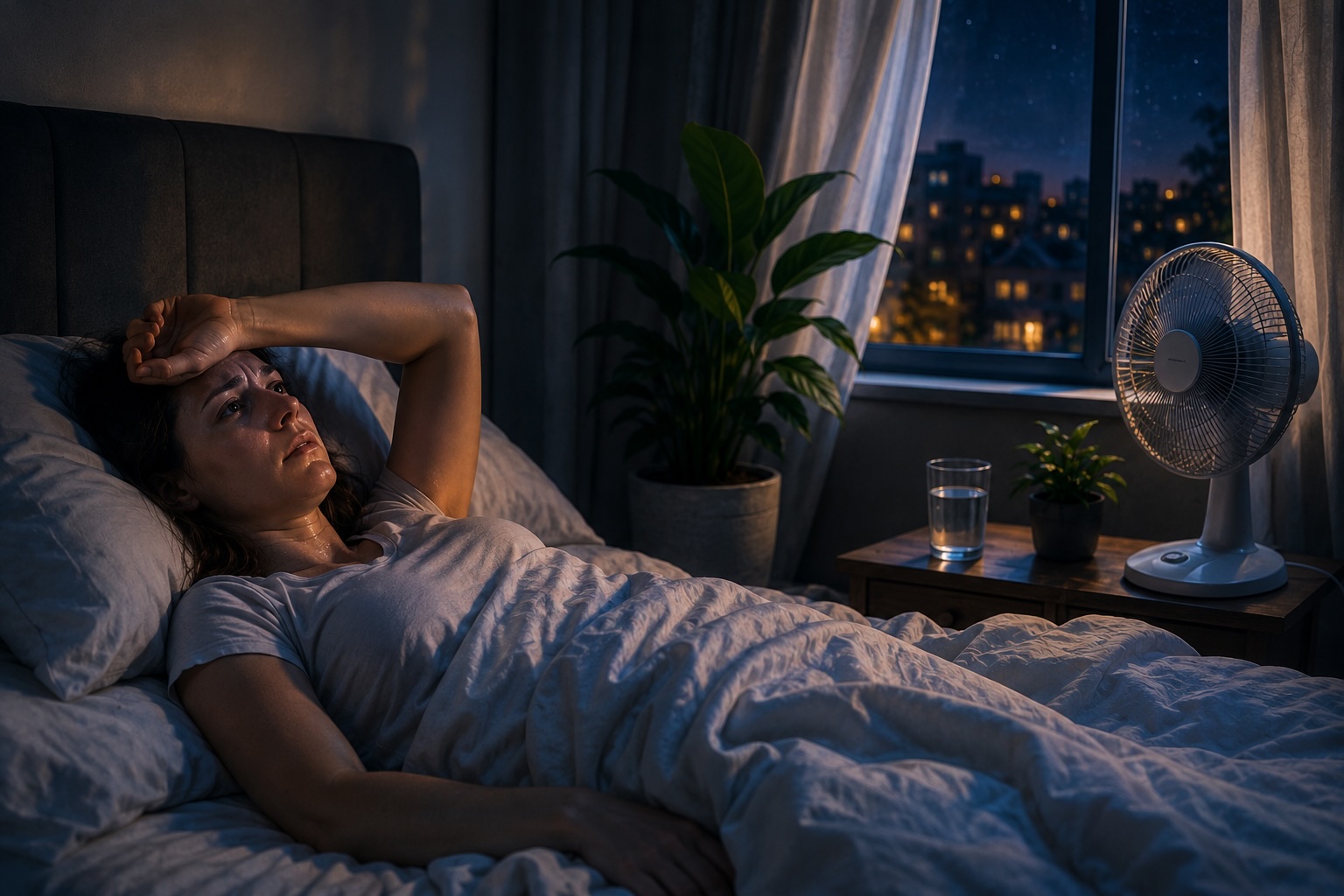
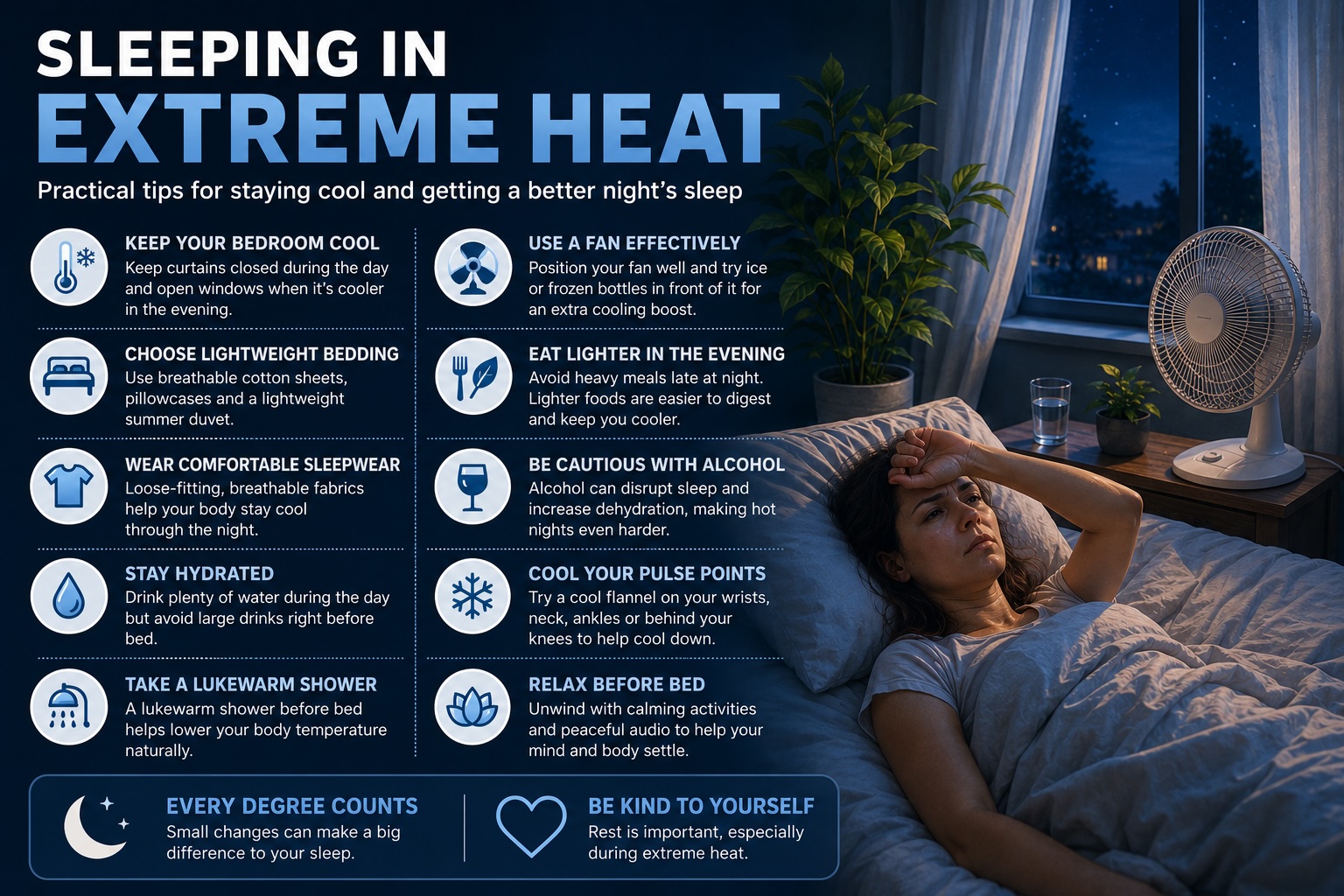
Sleeping in Extreme Heat: Practical Tips for Staying Cool and Getting a Better Night’s Sleep
There’s nothing quite like trying to sleep during a heatwave.
You throw off the duvet, turn over the pillow for the cool side, open every window you can find and still find yourself lying awake, unable to get comfortable. As temperatures rise, many people notice that falling asleep becomes more difficult and staying asleep becomes almost impossible.
The good news is that there are simple steps you can take to make sleeping in hot weather a little easier.
Why Does Heat Make It Harder to Sleep?
Your body naturally cools down as part of its normal sleep process.
In the evening, your core body temperature begins to fall, signalling that it’s time to rest. This cooling process helps prepare both your body and brain for sleep.
When your bedroom is too warm, your body has to work much harder to lose heat. As a result, you may find yourself:
- Struggling to fall asleep
- Waking more frequently during the night
- Feeling restless
- Sweating excessively
- Waking up feeling tired despite spending enough time in bed
Even small increases in bedroom temperature can have a noticeable effect on sleep quality.
Keep Your Bedroom as Cool as Possible
Your bedroom should be one of the coolest rooms in the house.
During particularly hot days:
- Keep curtains or blinds closed during the afternoon.
- Block direct sunlight from entering the room.
- Open windows when outdoor temperatures begin to fall in the evening.
- If safe to do so, open windows on opposite sides of the house to create a cross breeze.
Keeping heat out during the day is often more effective than trying to cool the room once bedtime arrives.
Choose Lightweight Bedding
Heavy duvets trap heat.
During hot weather, consider switching to:
- Lightweight cotton sheets
- Summer duvets
- Cotton pillowcases
- Breathable blankets
Natural fibres such as cotton and linen generally allow better airflow than synthetic materials.
Wear Comfortable Sleepwear
What you wear to bed can make a big difference.
Choose loose-fitting clothing made from breathable fabrics.
Cotton and bamboo fabrics are popular choices because they help wick moisture away from the skin and allow heat to escape more easily.
Some people may even find sleeping with minimal clothing more comfortable during particularly warm nights.
Stay Hydrated
Warm weather increases the amount of fluid your body loses through sweating.
Drink plenty of water throughout the day to stay hydrated.
Try not to leave all your fluid intake until bedtime, however, as drinking large amounts immediately before sleep may increase the likelihood of waking during the night to use the bathroom.
Keeping a glass or bottle of water by the bed can also be helpful if you wake feeling thirsty.
Take a Lukewarm Shower Before Bed
While a cold shower may sound appealing, very cold water can sometimes cause blood vessels to constrict, making it harder for the body to lose heat afterwards.
A lukewarm shower or bath often works better.
It helps remove the heat built up during the day while allowing your body to cool naturally afterwards.
Use a Fan More Effectively
Fans don’t actually lower the air temperature, but they do help move air across your skin, encouraging sweat to evaporate and helping you feel cooler.
A few ways to improve their effectiveness include:
- Position the fan to move air across the bed rather than directly into your face.
- Place a bowl of ice or frozen water bottles in front of the fan for a temporary cooling effect.
- Use ceiling fans if available to improve air circulation.
Keep Electronics to a Minimum
Electronic devices generate heat.
If possible:
- Turn off unnecessary equipment.
- Avoid leaving laptops running.
- Charge phones away from the bed.
- Switch off lights that produce unnecessary warmth.
Every little reduction in heat can help.
Avoid Heavy Evening Meals
Large meals force the digestive system to work harder, generating additional body heat.
During very warm weather, many people sleep better after eating lighter evening meals.
Fresh salads, fruit, lean protein and lighter dishes may feel more comfortable than rich or heavy meals late in the evening.
Be Careful With Alcohol
Although a cold drink may feel refreshing, alcohol can make sleeping in hot weather more difficult.
It may:
- Increase dehydration
- Disrupt sleep quality
- Cause more frequent waking
- Leave you feeling less refreshed in the morning
If you do choose to drink alcohol, try to balance it with plenty of water.
Cool Your Pulse Points
Applying something cool to areas where blood vessels are close to the skin can help you feel more comfortable.
Try gently cooling:
- Wrists
- Neck
- Ankles
- Behind the knees
A cool, damp flannel can be surprisingly effective on particularly warm nights.
Keep Your Pillow Cool
Many people find that their pillow becomes uncomfortable during hot weather.
Some simple tricks include:
- Turning the pillow over to the cooler side.
- Using breathable pillowcases.
- Keeping a spare pillowcase nearby.
- Placing your pillow in a cool room before bedtime.
It’s a small change, but one that many people find surprisingly helpful.
Relax Before Bed
Heat can make us feel irritable, restless and frustrated.
Adding stress into the mix often makes it even harder to sleep.
Take a little time to unwind before bed by:
- Reading a book
- Practising gentle stretching
- Listening to calming music
- Meditating
- Enjoying peaceful soundscapes
Helping your mind relax can make falling asleep easier, even if conditions aren’t perfect.
Listen to Relaxing Soundscapes
During warm summer nights, outside noise often increases as more people keep windows open.
Birds, traffic, neighbours and other sounds can become more noticeable.
Calming soundscapes or gentle ambient audio can help mask these distractions while creating a peaceful atmosphere for sleep.
Many people find that relaxing audio becomes an important part of their bedtime routine, particularly during hot weather when sleep can already feel more challenging.
Don’t Worry if Sleep Isn’t Perfect
One poor night’s sleep won’t usually cause long-term problems.
If you struggle during a heatwave, try not to become anxious about it.
The more pressure you place on yourself to sleep, the harder it often becomes.
Focus on staying comfortable, relaxing and allowing sleep to come naturally.
When to Seek Advice
Occasional difficulty sleeping during hot weather is perfectly normal.
However, if sleep problems continue long after temperatures return to normal or begin affecting your daily life, it may be worth discussing them with your GP.
Persistent sleep difficulties can sometimes have other underlying causes that deserve attention.
Final Thoughts
Heatwaves can make sleeping difficult, but a few simple changes can make a noticeable difference.
Keeping your bedroom cool, staying hydrated, choosing lightweight bedding and allowing yourself time to unwind before bed all help create the best possible environment for restful sleep.
Remember that perfect sleep isn’t always possible during extreme weather, and that’s okay.
Be patient with yourself, stay cool where you can and focus on creating a calm bedtime routine.
At Sleep Radio, we’re here every night with peaceful soundscapes and relaxing audio designed to help you switch off, unwind and enjoy the most restful sleep possible—even when the temperature outside has other ideas.