
Technology That Actually Helps You Sleep
Technology That Actually Helps You Sleep
Technology is often blamed for poor sleep.
Late-night scrolling, endless notifications and bright screens have certainly earned their reputation as sleep disruptors. However, not all technology is bad for sleep. In fact, some modern devices and tools can genuinely help create healthier sleep habits when used correctly.
The challenge is separating useful technology from clever marketing.
The sleep industry is full of gadgets promising miraculous results, but only a handful have practical benefits supported by common sense and, in some cases, scientific evidence.
Here are some of the technologies that may genuinely help improve sleep and relaxation.
Blue Light Filters and Night Modes
One of the simplest and most effective sleep technologies is already built into most smartphones, tablets and computers.
Night mode reduces the amount of blue light emitted by screens during the evening.
Blue light can suppress melatonin production, the hormone that helps regulate your sleep-wake cycle.
Using night mode won’t completely eliminate the effects of screen use, but it can reduce some of the impact.
Most modern devices allow you to schedule night mode to activate automatically after sunset.
Smart Lighting
Lighting plays a major role in regulating your body’s internal clock.
Smart bulbs can automatically:
- Dim during the evening
- Shift to warmer colours at night
- Brighten gradually in the morning
This helps mimic natural daylight patterns and may support healthier sleep habits.
Many people find that reducing bright white light in the evening helps them feel naturally sleepy.
White Noise and Sound Machines
Sound machines have become increasingly popular in recent years.
These devices produce consistent background sounds designed to mask disturbances and create a more relaxing environment.
Popular options include:
- Rainfall
- Ocean waves
- White noise
- Pink noise
- Forest sounds
They can be particularly useful for people who live in noisy environments or are easily disturbed by sudden sounds during the night.
Sleep Radio and Relaxation Audio
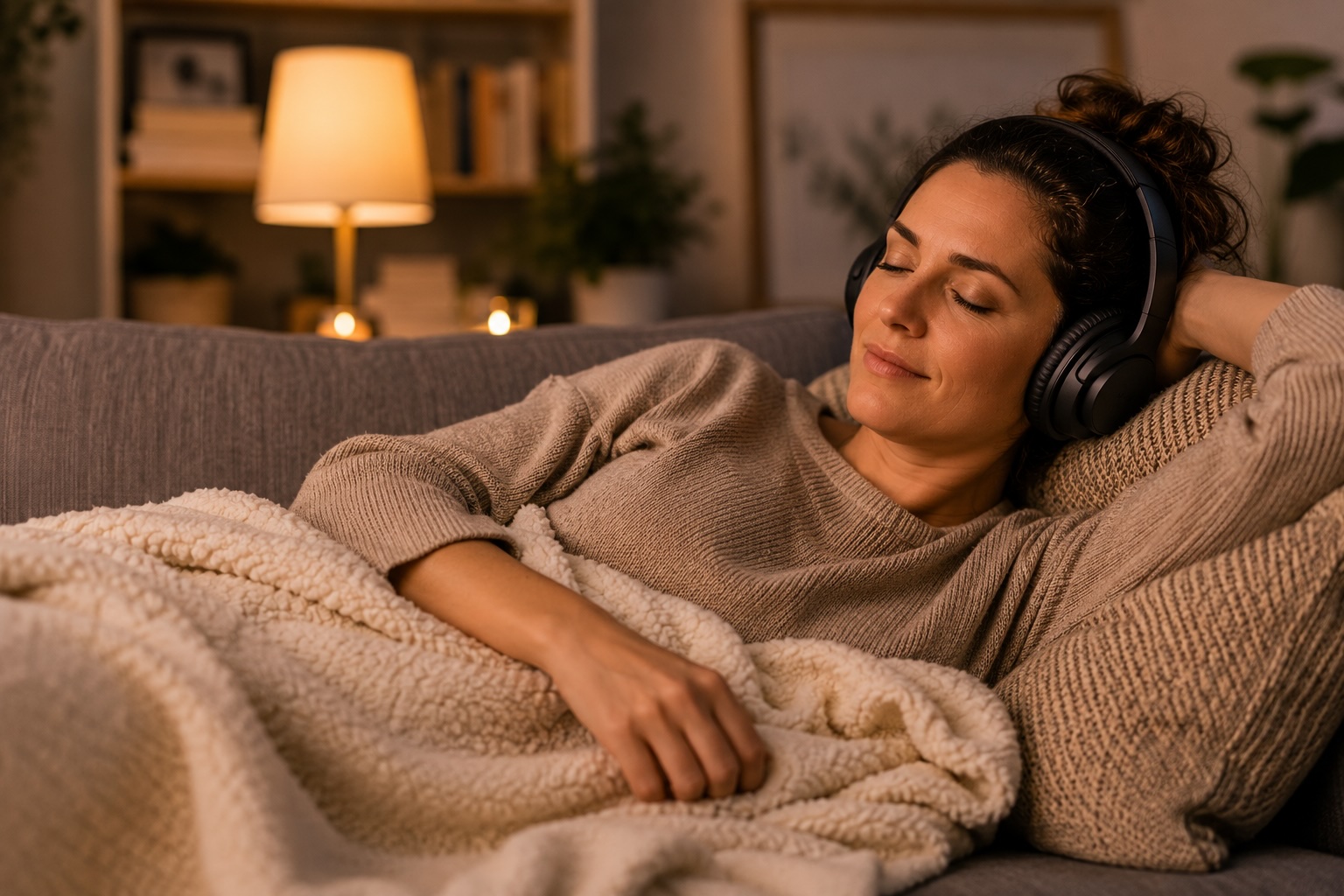
Streaming services dedicated to relaxation and sleep have become a practical alternative to traditional sleep aids.
Calming soundscapes, ambient music and nature sounds can help create a peaceful atmosphere before bed.
Many listeners use relaxing audio as part of a nightly wind-down routine, helping the brain associate certain sounds with relaxation and sleep.
The key is choosing gentle, non-stimulating content rather than audio designed to hold your attention.
Sunrise Alarm Clocks
Traditional alarm clocks wake us abruptly.
Sunrise alarms take a different approach.
These devices gradually increase light levels before your wake-up time, simulating a natural sunrise.
Many users report feeling:
- Less groggy
- More alert
- Better rested
The gradual increase in light encourages the body’s natural waking processes rather than forcing an immediate transition from sleep.
Smart Thermostats
Temperature has a significant influence on sleep quality.
Most people sleep best in a cool room.
Smart thermostats can automatically adjust bedroom temperatures throughout the night, helping maintain an environment more conducive to sleep.
While they won’t solve every sleep problem, they can help optimise one of the most important factors affecting comfort.
Wearable Sleep Trackers
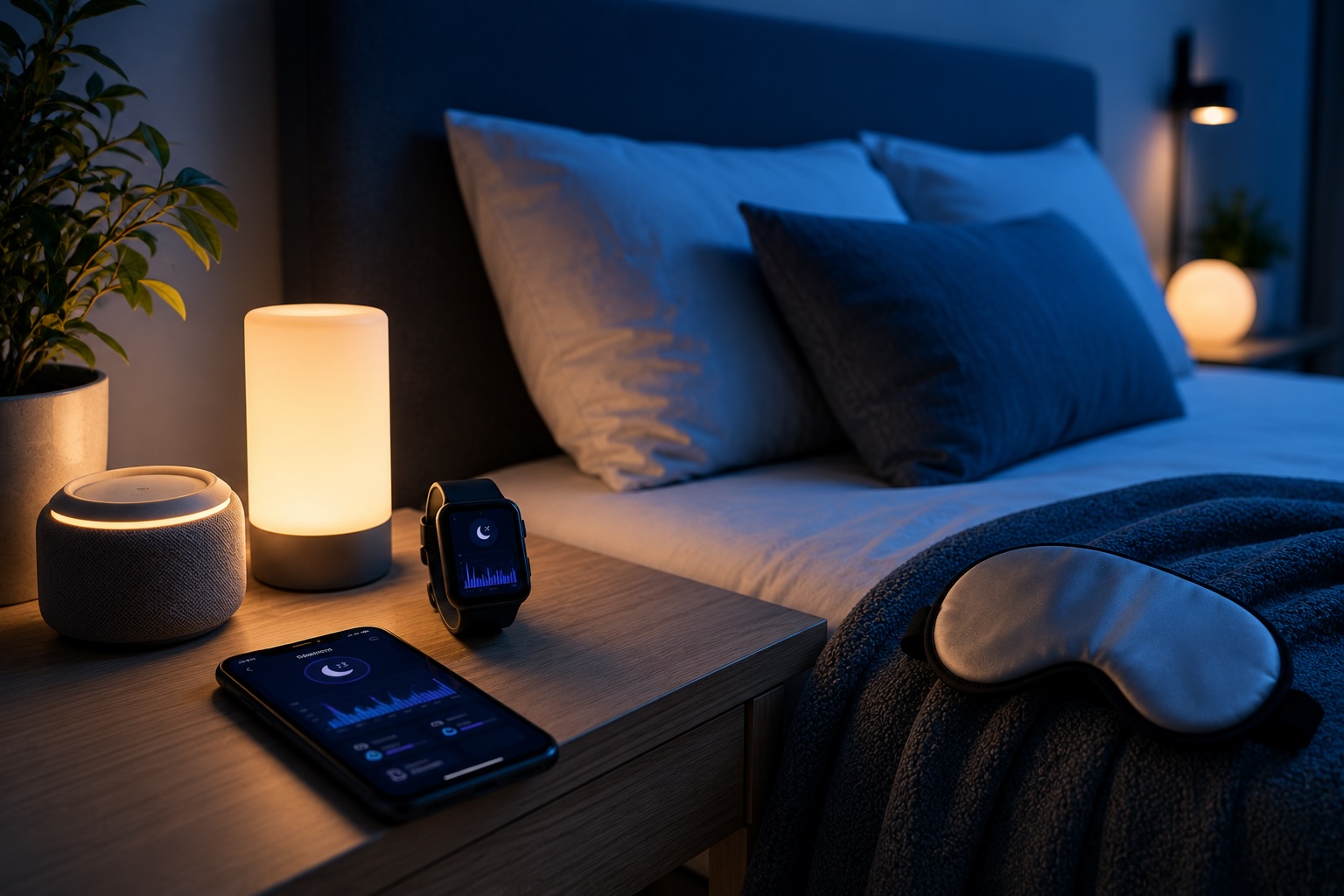
Smartwatches and fitness trackers often include sleep-monitoring features.
These devices can estimate:
- Sleep duration
- Sleep stages
- Heart rate
- Night-time movement
While consumer sleep trackers are not as accurate as professional sleep studies, they can help identify broad patterns.
For example, you might discover that:
- You sleep less than you thought
- Late caffeine affects your sleep
- Exercise improves sleep quality
Used sensibly, they can provide useful insights.
Meditation and Mindfulness Apps
Meditation apps have introduced millions of people to relaxation techniques.
Many offer:
- Guided meditations
- Breathing exercises
- Sleep stories
- Relaxation sessions
- Mindfulness training
For people who struggle with racing thoughts at bedtime, these tools can provide a structured way to relax and unwind.
Humidifiers
Although often overlooked, humidifiers can improve comfort in dry environments.
They may help reduce:
- Dry throats
- Dry nasal passages
- Irritation caused by indoor heating
For some people, this can contribute to a more comfortable sleeping environment.
Many humidifiers also include gentle ambient lighting and soothing sound features.
Technology That Probably Doesn’t Help
Not every sleep gadget is worth the money.
Be cautious of products that promise:
- Instant sleep improvement
- Miracle results
- Scientifically impossible claims
- Dramatic health transformations
If a product sounds too good to be true, it probably is.
The fundamentals of good sleep remain remarkably simple:
- Consistent sleep schedules
- Healthy eating
- Regular exercise
- Stress management
- Comfortable sleep environments
No gadget can fully replace these foundations.
The Best Technology Is Often the Simplest
Many people assume better sleep requires expensive equipment.
In reality, some of the most effective sleep technologies are surprisingly simple:
- A blue light filter
- A sunrise alarm
- Relaxing audio
- Smart lighting
- A cooler bedroom
Sometimes small improvements make the biggest difference.
Final Thoughts
Technology is not inherently good or bad for sleep.
Like any tool, its value depends on how it is used.
While excessive screen time and constant notifications can interfere with rest, the right technology can help create healthier routines, more relaxing environments and better sleep habits.
The goal isn’t to buy every gadget on the market. It’s to identify the tools that genuinely support relaxation and wellbeing while avoiding those that simply add more noise to an already busy world.
Used wisely, technology can become an ally rather than an obstacle on the journey to better sleep.