


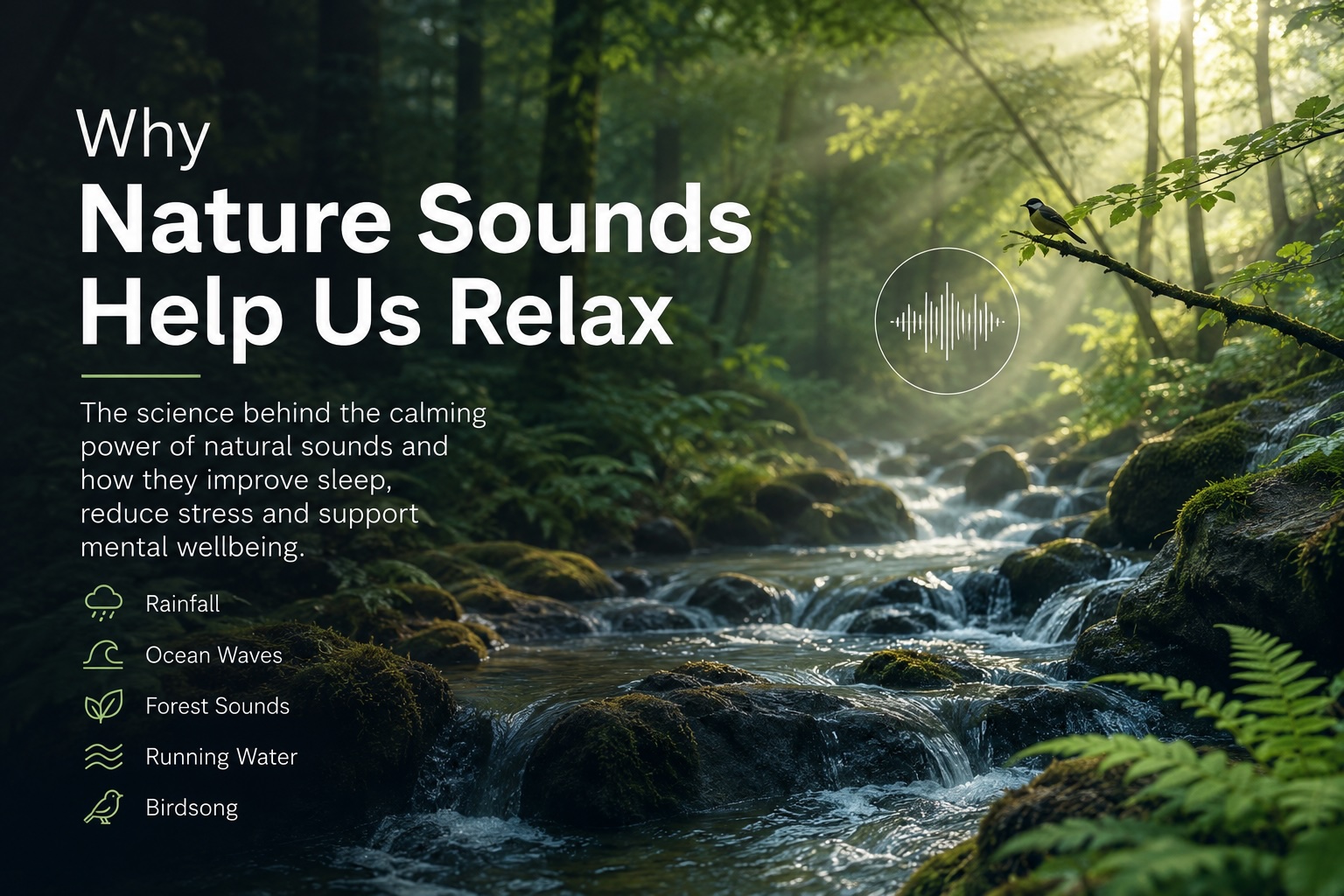
Why Nature Sounds Help Us Relax
Why Nature Sounds Help Us Relax
There is something almost universally comforting about the sounds of nature.
The gentle patter of rain on a window, waves rolling onto a beach, birds singing in the distance or wind moving through trees can create an immediate sense of calm. Many people instinctively turn to these sounds when they want to relax, meditate or fall asleep.
But why do natural sounds affect us so deeply?
The answer lies in a fascinating combination of psychology, biology and human history. Long before cities, traffic and smartphones existed, nature provided the soundtrack to everyday life. Our brains evolved in natural environments, and many researchers believe this connection continues to influence how we respond to sound today.
Understanding why nature sounds are so effective may help explain why they have become one of the most popular tools for relaxation and sleep.
Our Ancient Connection to Nature
For most of human history, people lived much closer to the natural world.
There were no engines, televisions or mobile phones. Instead, daily life was accompanied by sounds such as:
- Flowing water
- Rustling leaves
- Birdsong
- Rainfall
- Ocean waves
- Gentle wind
These sounds often signalled safety and stability.
For example, hearing birds singing generally indicated a calm environment free from immediate danger. The steady flow of a nearby stream suggested access to fresh water. Gentle wind moving through trees provided reassurance that all was well in the surrounding environment.
Over thousands of years, our brains became familiar with these patterns.
Today, even though our lifestyles have changed dramatically, many people still find these sounds naturally calming.
The Problem with Modern Noise
Unlike nature sounds, many modern sounds are unpredictable.
Examples include:
- Traffic
- Sirens
- Construction work
- Phone notifications
- Alarms
- Television advertisements
These sounds frequently demand attention.
The brain constantly evaluates unexpected noises, asking questions such as:
- What was that?
- Is it important?
- Do I need to react?
This process can increase alertness and make relaxation more difficult.
Nature sounds, on the other hand, tend to be gentle, consistent and predictable.
Rather than pulling our attention away from relaxation, they often help create a feeling of safety and calm.
How Nature Sounds Affect Stress Levels
When we experience stress, the body’s “fight or flight” response becomes activated.
Heart rate may increase, muscles tighten and breathing can become faster.
Nature sounds may help counter this response.
Research suggests that natural audio environments can:
- Reduce perceived stress
- Encourage relaxation
- Support emotional wellbeing
- Promote feelings of calm
- Help lower mental fatigue
Many people notice that they feel more relaxed after spending time near the sea, walking through woodland or sitting beside a river.
Even listening to recordings of these environments can create similar feelings.
Why Rainfall Is So Popular
Rain is one of the most widely used sounds for relaxation and sleep.
Its popularity comes from several factors.
Consistency
Rain creates a continuous, predictable sound that does not require active attention.
Sound Masking
Rainfall helps mask distracting noises such as traffic, neighbours or household sounds.
Comfort
Many people associate rain with being safe and warm indoors, creating positive emotional associations.
The result is a sound environment that feels both calming and familiar.
The Power of Ocean Waves
Ocean sounds are another favourite for relaxation.
Waves have a naturally rhythmic quality that mirrors many relaxation techniques.
The gentle rise and fall of the tide creates an audio pattern that can feel almost hypnotic.
Some researchers believe this rhythm may encourage slower breathing and help the body enter a more relaxed state.
Many people also associate beaches with holidays, rest and freedom from everyday responsibilities, which may further enhance the calming effect.
Why Birdsong Improves Mood
Birdsong is often described as uplifting and peaceful.
Interestingly, studies have suggested that hearing birds may have positive effects on mood and mental wellbeing.
Birdsong is typically associated with:
- Morning light
- Safe environments
- Natural spaces
- Positive outdoor experiences
For many listeners, birdsong creates feelings of optimism and connection with nature.
Forest Sounds and Mental Recovery
Spending time in natural environments has been linked to reduced stress and improved mental wellbeing.
Researchers often refer to a concept called “attention restoration.”
Throughout the day, our minds become tired from constant concentration and decision-making.
Natural environments provide what psychologists call “soft fascination” — experiences that gently hold our attention without demanding effort.
Forest sounds such as:
- Rustling leaves
- Distant birds
- Gentle breezes
- Woodland ambience
may help support this mental recovery process.
Nature Sounds and Sleep
One of the biggest reasons people use nature sounds is to improve sleep.
Natural audio can help by:
Reducing Distractions
Steady background sounds mask sudden noises that might otherwise wake us.
Encouraging Relaxation
Nature sounds create a peaceful atmosphere that helps prepare the mind for sleep.
Supporting Bedtime Routines
Listening to the same sounds each evening can become part of a calming pre-sleep ritual.
Over time, the brain begins to associate those sounds with rest and relaxation.
Choosing the Right Nature Sound
Different sounds work for different people.
Some popular options include:
Rainfall
Ideal for relaxation, focus and sleep.
Ocean Waves
Excellent for meditation and stress reduction.
Forest Ambience
Provides a peaceful and natural atmosphere.
Running Water
Gentle streams and waterfalls often create a deeply calming effect.
Thunderstorms
Some listeners enjoy distant thunder combined with rainfall for a cosy and relaxing environment.
Experimenting with different sounds can help you discover what works best for your own relaxation and sleep routine.
Bringing Nature Indoors
Not everyone has access to peaceful natural environments every day.
Fortunately, modern technology makes it possible to enjoy nature sounds wherever you are.
Whether you’re living in a busy city, travelling frequently or simply looking for a way to unwind after work, nature-inspired audio can help create a calming atmosphere at home.
Even a few minutes of listening can provide a welcome break from the noise and distractions of modern life.
How Sleep Radio Uses Nature-Inspired Soundscapes
At Sleep Radio, nature-inspired audio forms an important part of our programming.
Our carefully curated soundscapes combine relaxing ambient sounds, gentle atmospheres and natural elements designed to help listeners create moments of calm throughout the day and night.
Whether you’re falling asleep, studying, meditating or simply taking a break from a busy world, these soothing sounds can help create the perfect environment for relaxation.
Final Thoughts
Nature has been helping humans relax for thousands of years.
The sounds of rainfall, ocean waves, forests and flowing water connect us to environments that feel safe, peaceful and restorative.
In today’s fast-paced world, taking time to reconnect with those sounds can provide a valuable opportunity to slow down, reduce stress and improve wellbeing.
Sometimes the simplest path to relaxation is listening to the sounds that have surrounded humanity since the very beginning.